
Overview
With the design team we led discovery research to building a shared, evidence-based understanding of who is using the RNID’s website and why this had never been done before.
It was then turned into an in depth discovery project that was broken up into a phased roadmap that now underpins RNID’s ongoing website strategy.
The problem
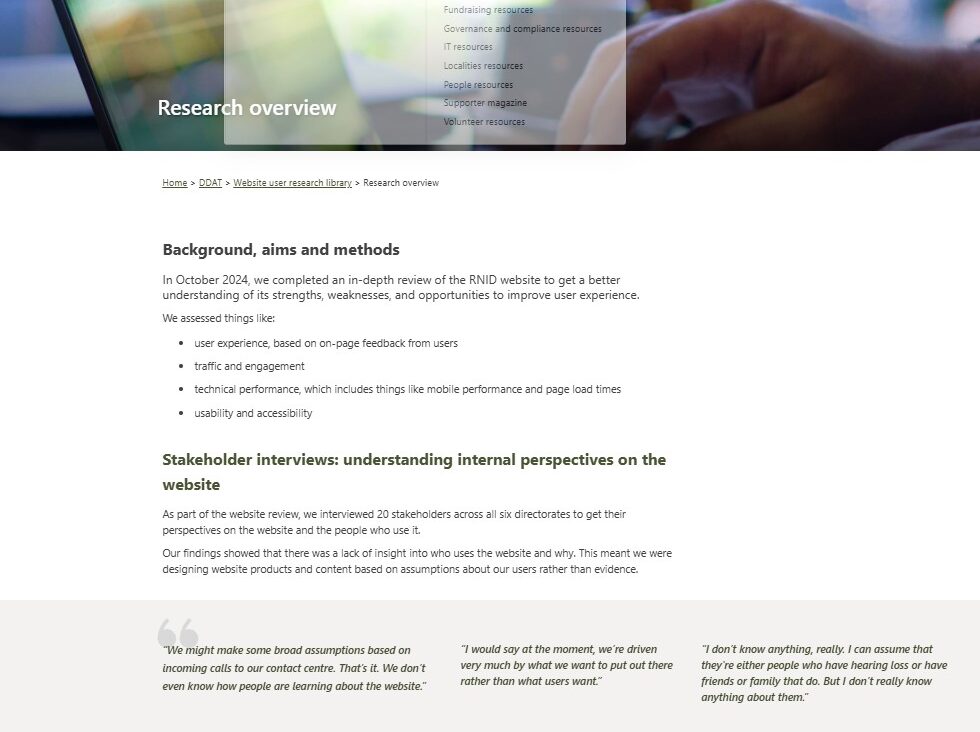
RNID’s website content was being created without much idea of who it was actually for, so we began an in-depth review of the website in October 2024 to understand why, by starting with key stakeholder interviews set across all six of RNID’s directorates.
The findings were surprising as there was a real lack of insight into who used the website and why, which meant teams were designing content and navigation based on assumptions rather than evidence, leading to confusing journeys and inconsistent content.
To give an idea here are stakeholder quotes from the interviews:
“We might make some broad assumptions based on incoming calls to our contact centre. That’s it. We don’t even know how people are learning about the website.”
“I would say at the moment, we’re driven very much by what we want to put out there rather than what users want.”
“I don’t know anything, really. I can assume that they’re either people who have hearing loss or have friends or family that do. But I don’t really know anything about them.”
Outcome in brief
This evidence-based project replaced assumptions with real insight moving RNID from “we don’t really know who uses the website” to an actionable digital strategy. By establishing five core user-need themes and publishing a shared intranet research library, the findings now drive organisation wide decision-making and power three priority workstreams:
- Website Information Architecture restructuring
- BSL accessibility discovery
- Goal-oriented persona development
Discovery
Testing assumptions with real users
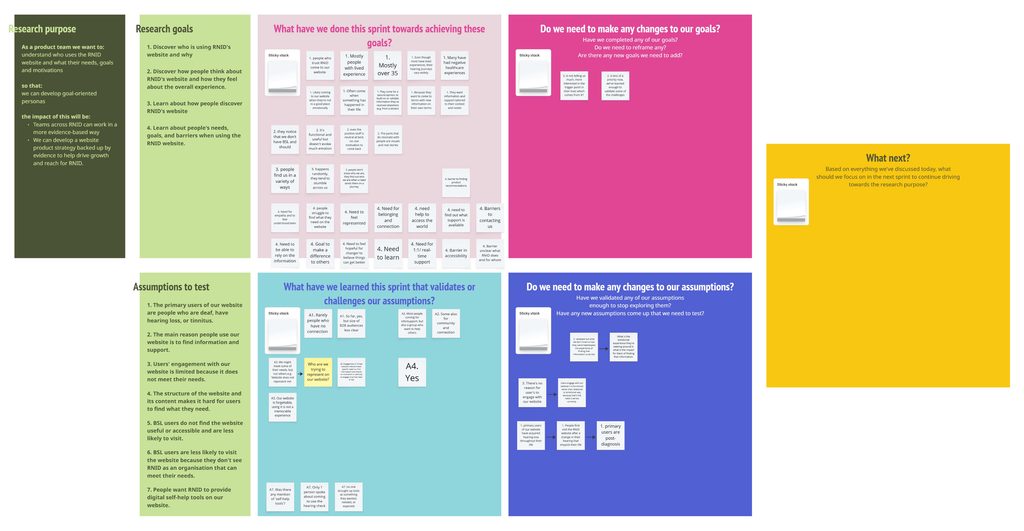
Rather than treating the stakeholder interviews as the answer, I used them as a starting point in the research. Working with the Website Product Team, I identified these specific assumptions the team were following but had never actually tested:
- Primary users: who actually uses the website
- BSL accessibility: whether BSL users find the site useful and accessible
- Site navigation: whether the existing structure makes content hard to find
Naming these gave the research a clearer, actionable job to do, rather than leaving it as general exploration task. To test these assumptions, we used a comprehensive research approach:
- Feedback data: reviewed existing responses from our “Did you find this page useful?” component.
- Behavioural analytics: collated and analysed heatmaps and Google Analytics across key user journeys.
- User interviews: interviewed 10 users recruited via a website pop-up survey.
- Subscriber survey: surveyed over 600 RNID newsletter subscribers, followed by deep-dive interviews with 10 respondents.
- Stakeholder collaboration: facilitated a collaborative discovery workshop to align internal teams.
Iterative pivot during research
After the first round of interviews, we refined our strategy. We pivoted from broad questions about general site usage to targeted questions that focused on users seeking information about hearing loss or assistive technology. This shift delivered far richer, more actionable data.
What we found
What people said
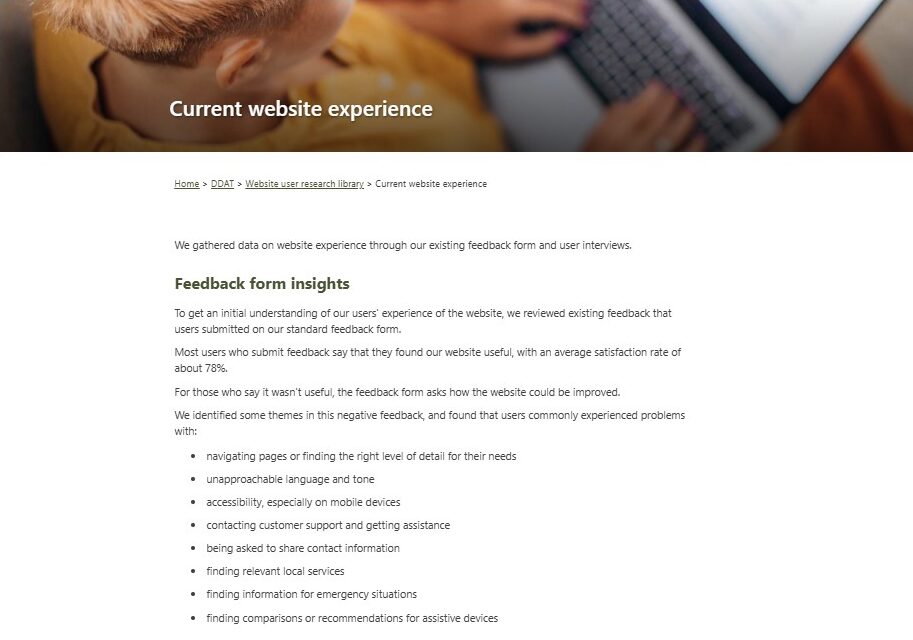
While overall site satisfaction was recorded at 78%, qualitative feedback uncovered significant, recurring friction points across key journeys:
- Navigation and hierarchy: users struggled to find the right level of detail, noting that generic labels like “Information and support” were too broad.
- Tone and relevance: content felt disjointed, overly heavy, or impersonal in places.
- Local services and emergency info: users faced difficulty finding localised support quickly.
- Product comparisons: technology pages lacked clear, comparative views between assistive devices.
These insights confirmed that navigation and content organization were our largest barriers, providing clear target areas for structural reform.
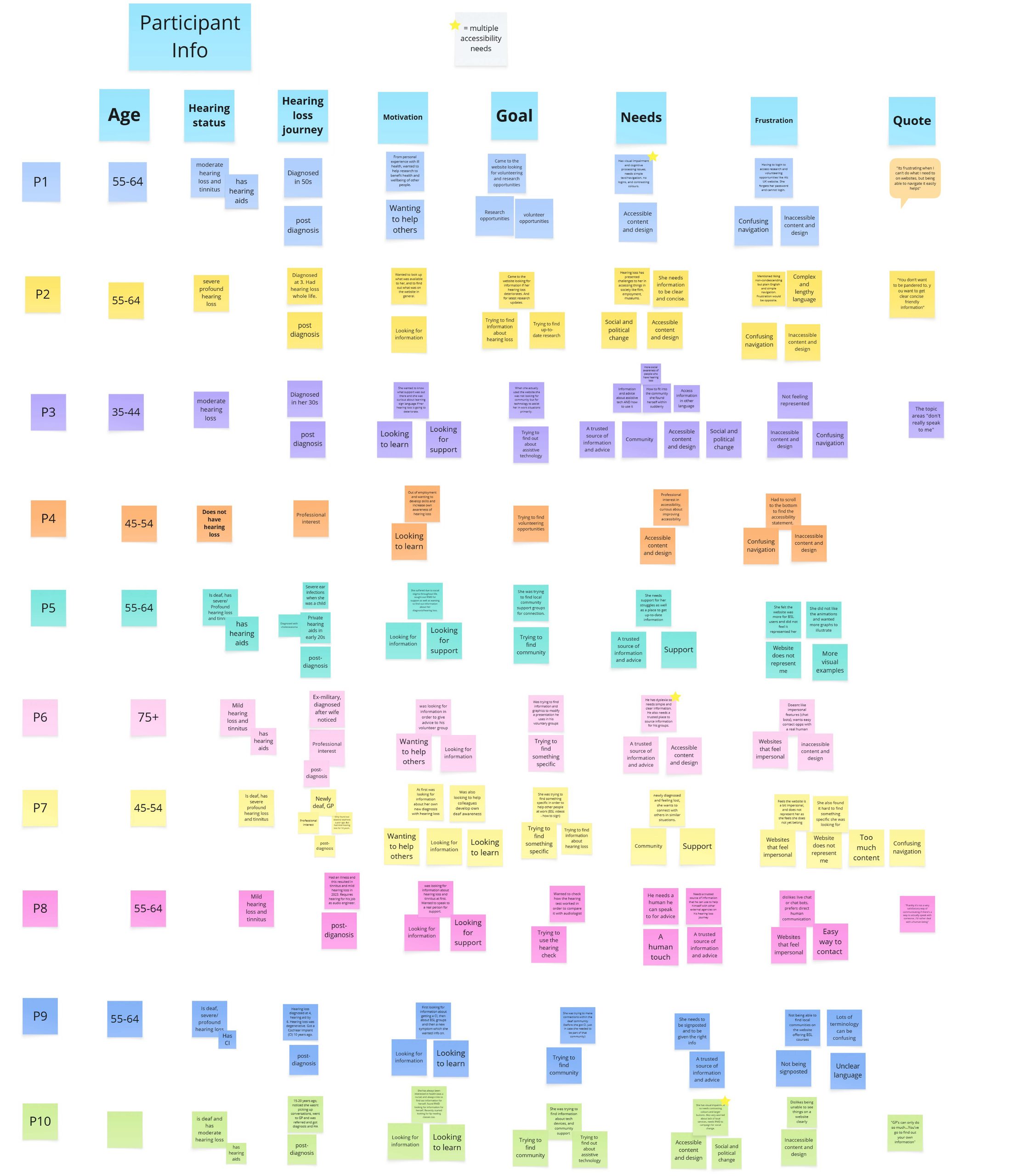
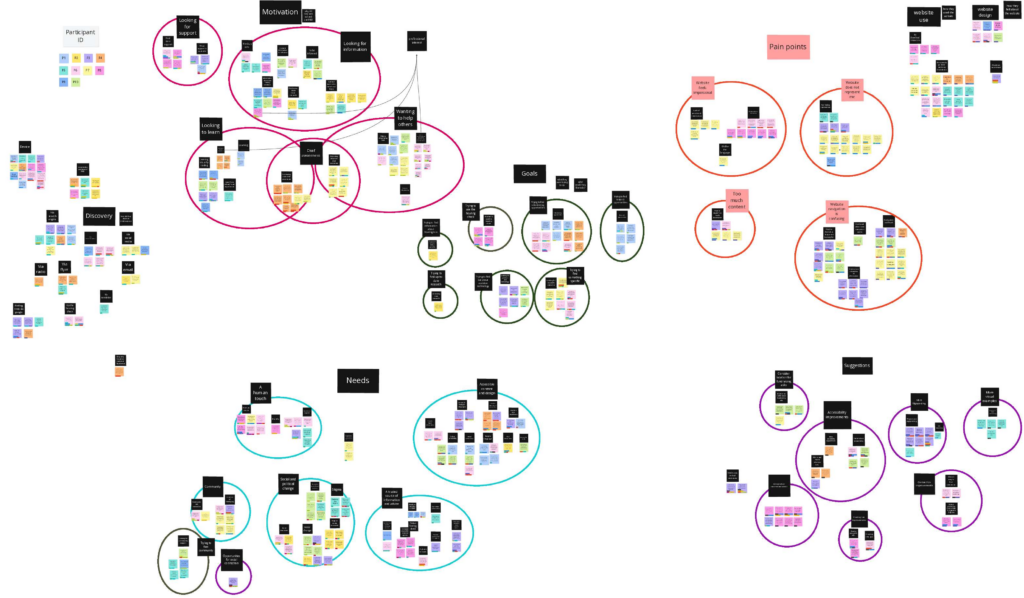
I synthesised each participant’s interview into an empathy map, capturing their hearing status, motivation, goals, needs, frustrations and sourcing a meaningful quote, so the team could see patterns across real people rather than an anonymised set of findings.
What the analytics and behavioural audit said
To ground our qualitative findings in hard behavioral data, we conducted an analytics and heatmap audit across core website journeys over a six-month period. By evaluating user paths, device usage, and interaction patterns, we identified clear digital friction points and key drop-off zones:
- High drop-off rate: only 33% of visitors who reached the ‘check your hearing’ page progressed to start the test, with friction driven by forced steps and dead clicks.
- Scrolling: engagement dropped at 50% down key ‘technology and product’ pages, while very few visitors scrolled to the bottom of critical benefits pages, confirming essential guidance was buried too far down.
- Mobile first: service led content like benefits saw three times more mobile traffic than desktop, showing a clear need for mobile-first practical support.
- Desktop frustration: desktop users experienced high rates of rage clicks on non-interactive text, headers, and white-space elements across both the hearing check and benefits journeys.
- Search and navigation: consistently heavy reliance on the search bar across homepages and deep product pages confirmed that visitors were struggling to navigate the primary site hierarchy.
Understanding what people actually needed
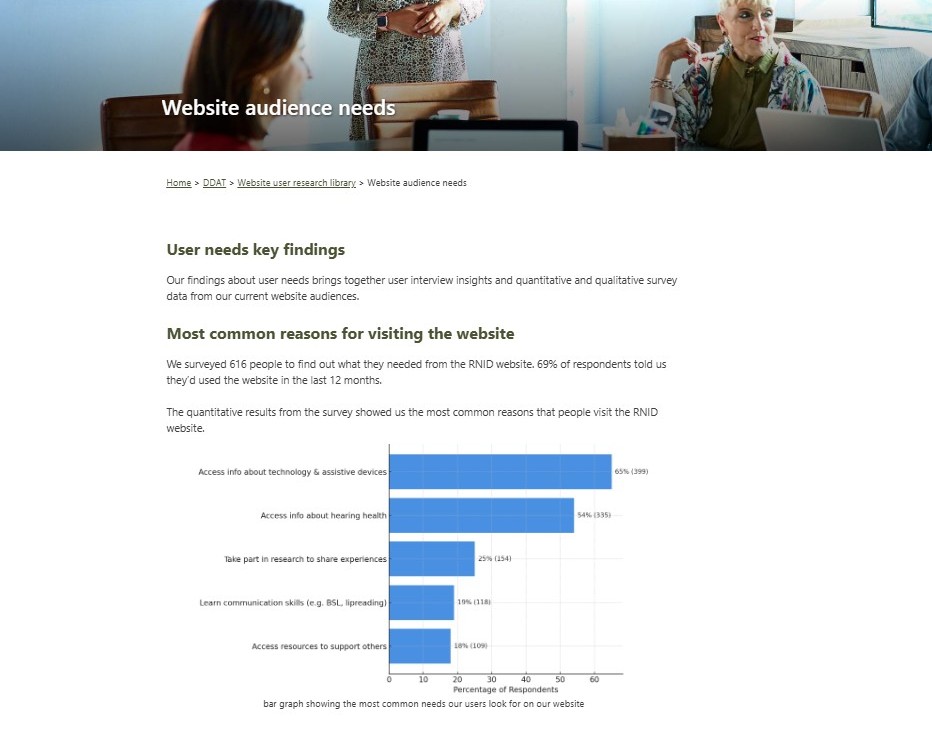
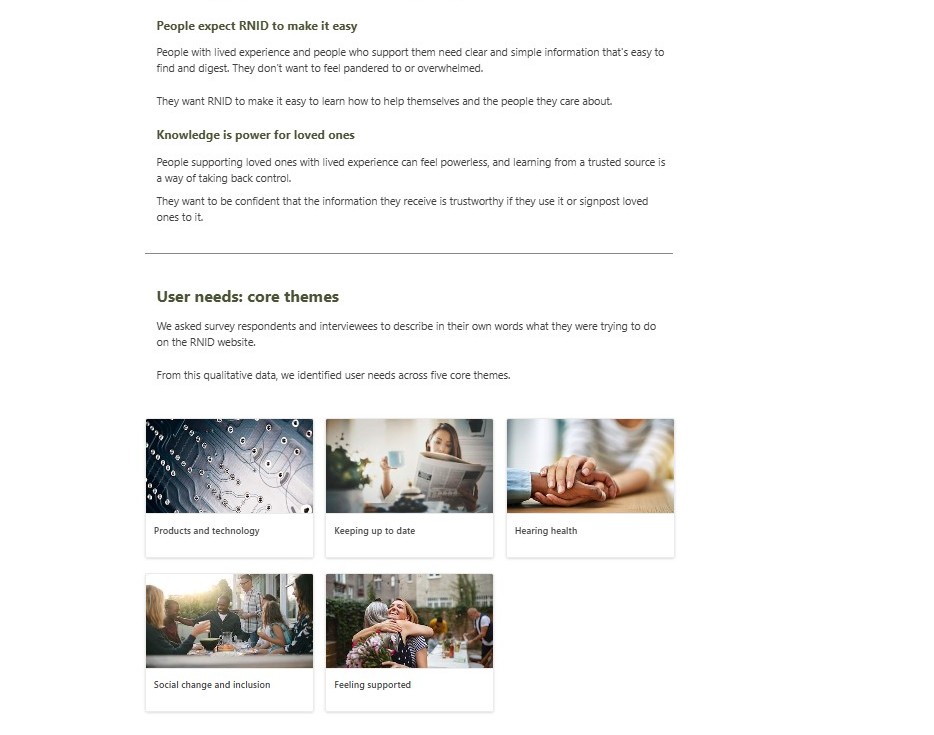
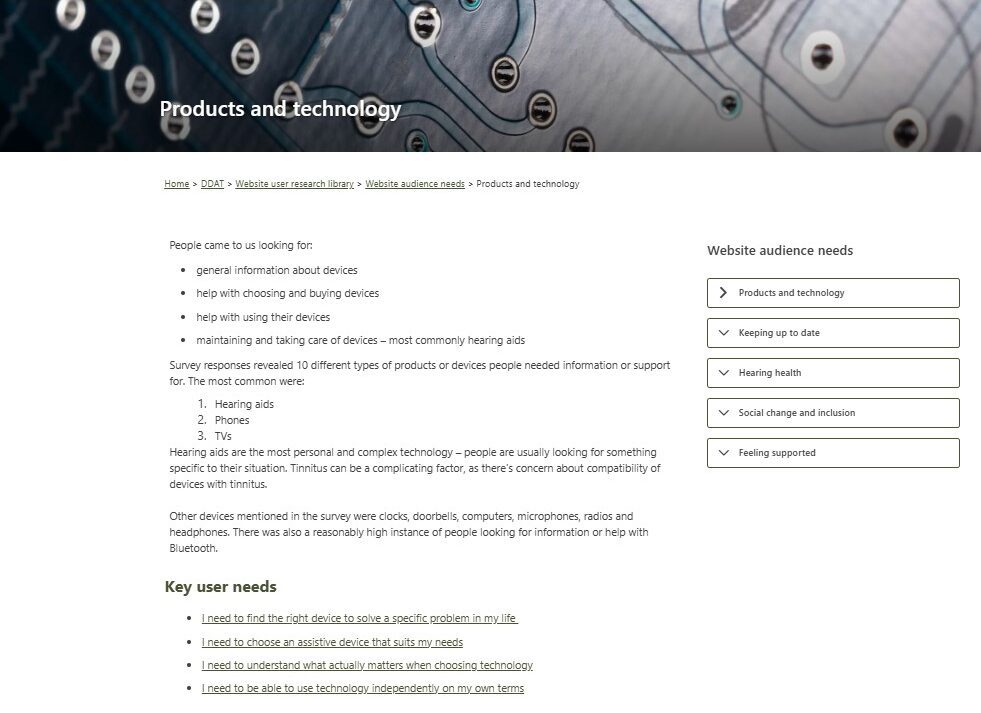
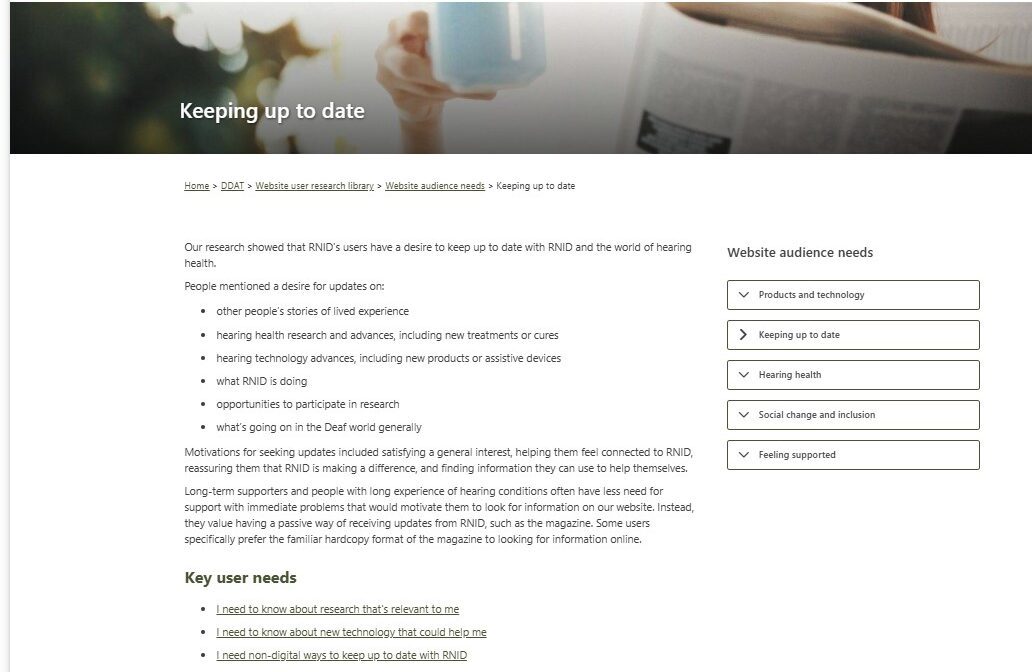
Alongside our user experience research, we surveyed 616 people to understand their primary motivations for visiting the website. Running a thematic analysis across all qualitative data revealed five core user-need themes:
- Products and technology
- Keeping up to date
- Hearing health
- Social change and inclusion
- Feeling supported
Across all five areas, one clear pattern emerged, was that users wanted to find content effortlessly and without needing to understand RNID’s internal structure or terminology and needed confidence that they had found accurate, trustworthy information tailored to their specific situation.
The process
Strategic roadmap
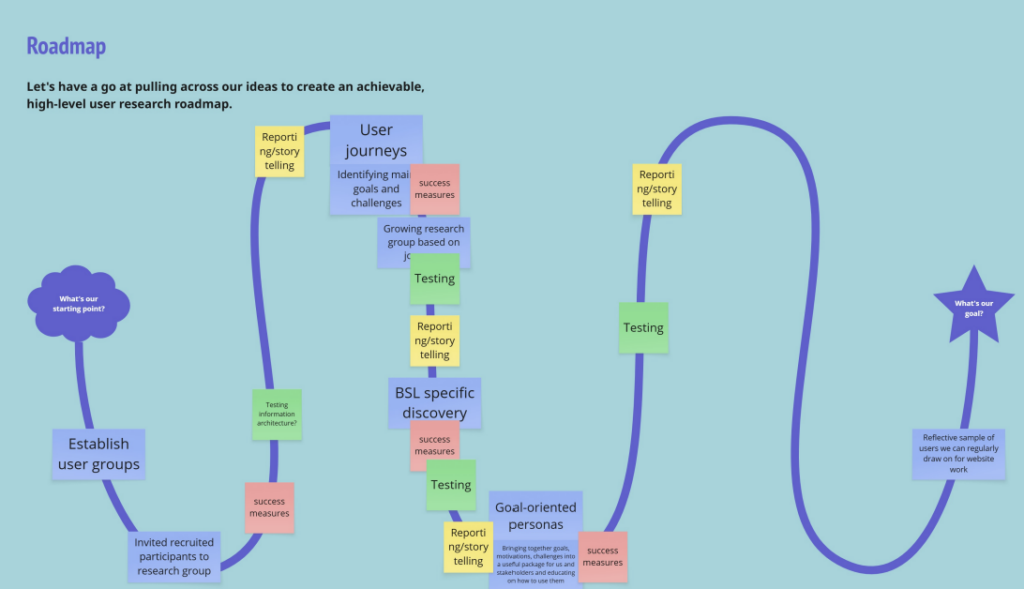
This research risked being written up like a report by only answering some questions, then perhaps being forgotten about. So in a dedicated workshop I worked with the wider product team to turn the research findings into a detailed phased roadmap, one that could be shared with senior stakeholders to build ongoing support for user research as a permanent part of how the team work and not just a one-off project.
We mapped five phases, each with its own goal, methods and output:
- Understand user groups: in-depth user interviews, producing empathy maps.
- Understand key user journeys: focused interviews and unmoderated testing, producing journey maps with pain points and opportunities.
- Review Information Architecture (IA): bringing in support for site mapping, card sorting and tree testing, producing current and proposed sitemaps and wireframes.
- BSL discovery work: further interviews, focus groups and unmoderated testing with BSL users, producing journey and empathy maps focused on BSL-specific pain points and accessibility insights.
- Generate personas: interviews, surveys and hypothesis testing, producing personas that bring together goals, motivations and challenges into a package the wider organisation could use.
Each phase was explicitly tied back to what it would do for RNID’s reach and retention, which kept the roadmap grounded in organisational goals rather than research for its own sake. Confusing navigation, for example, directly affects trust and user satisfaction.
Treat it like a product
To keep the project moving efficiently, we ran it using the same agile sprint framework as the product team. Every cycle had a clear research focus, defined hypotheses to test, and a recurring sprint review to evaluate what we learned or challenged.
This gave leadership full visibility into our progress as assumptions were systematically validated, embedding research directly into the product lifecycle.
Embedding the Research Library
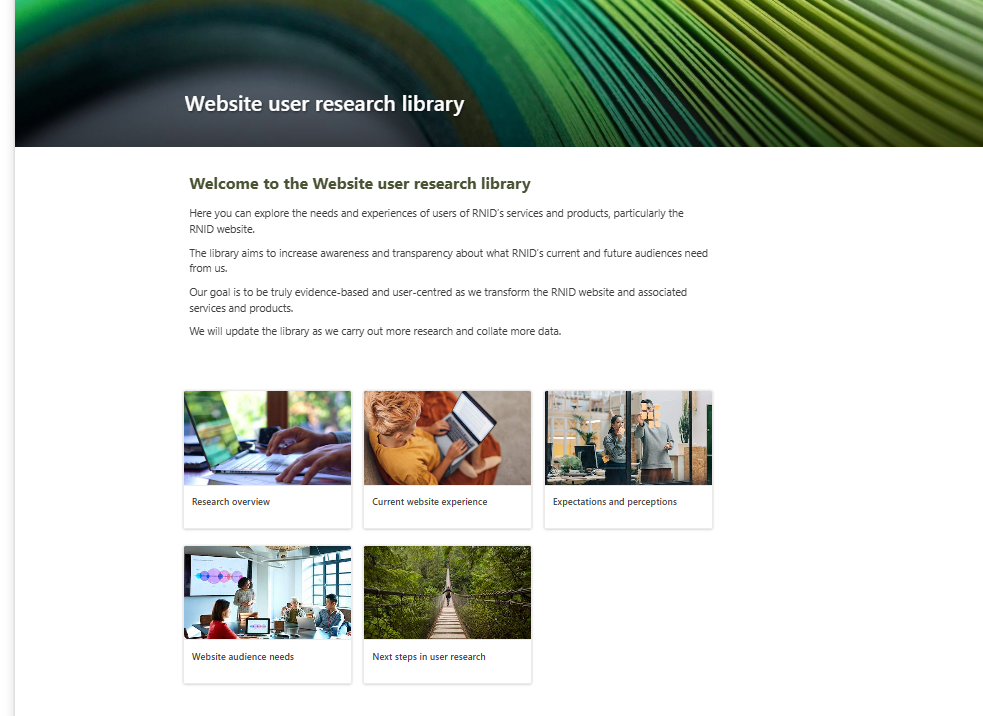
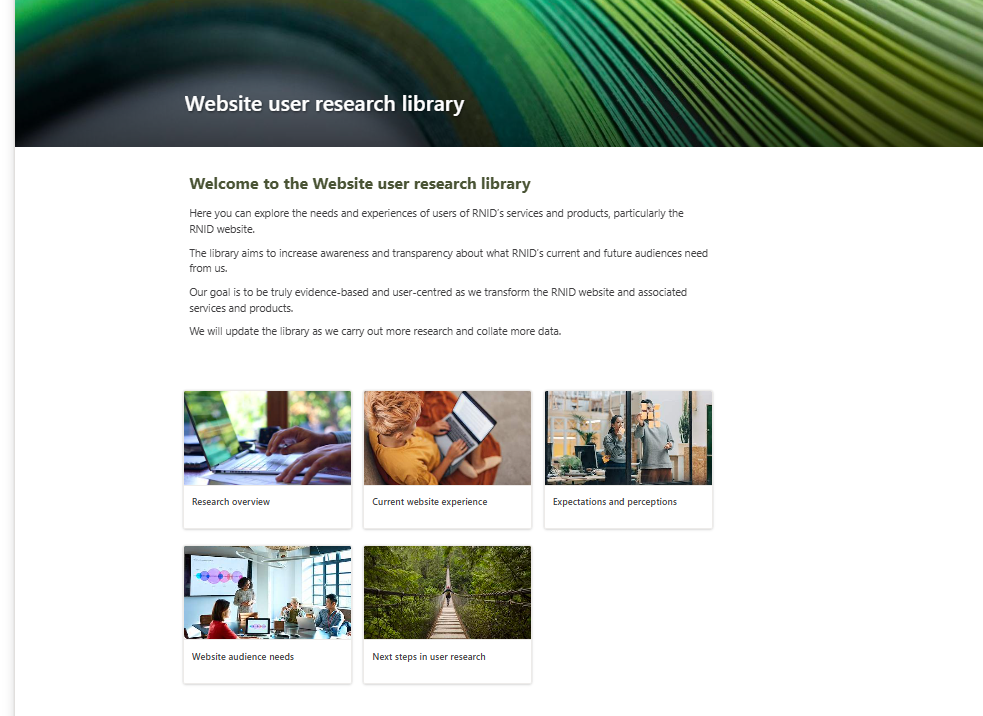
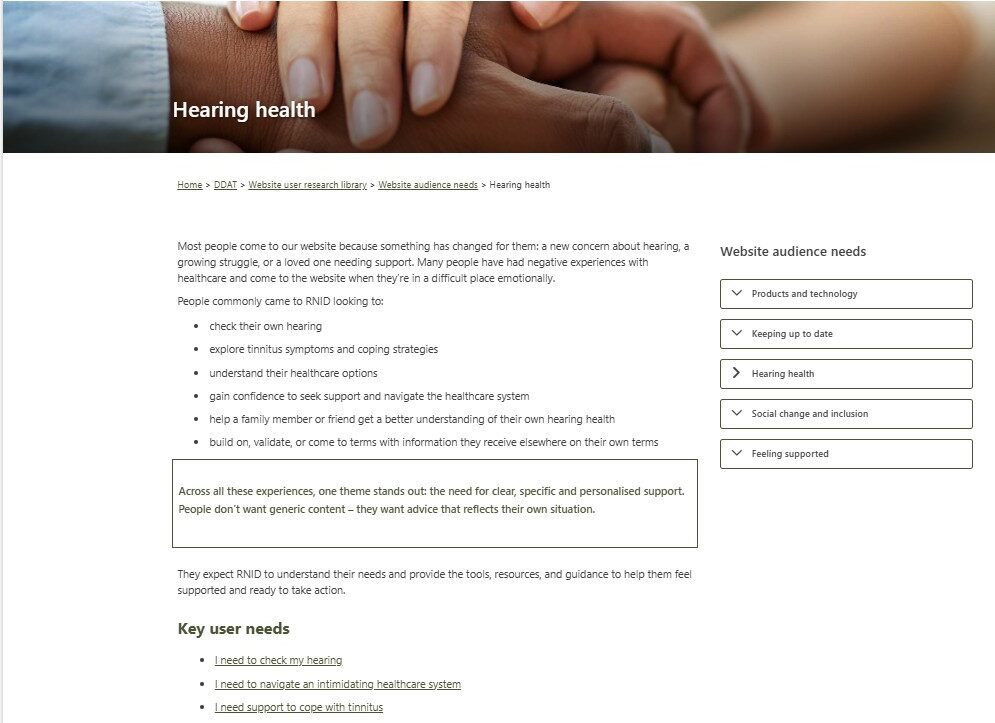
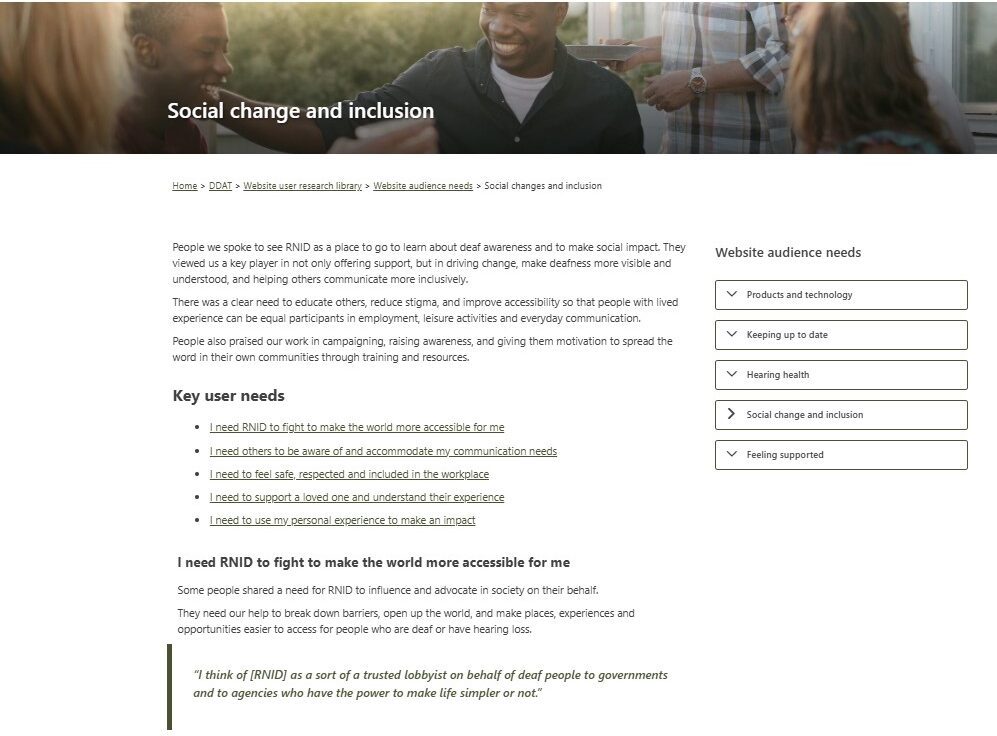
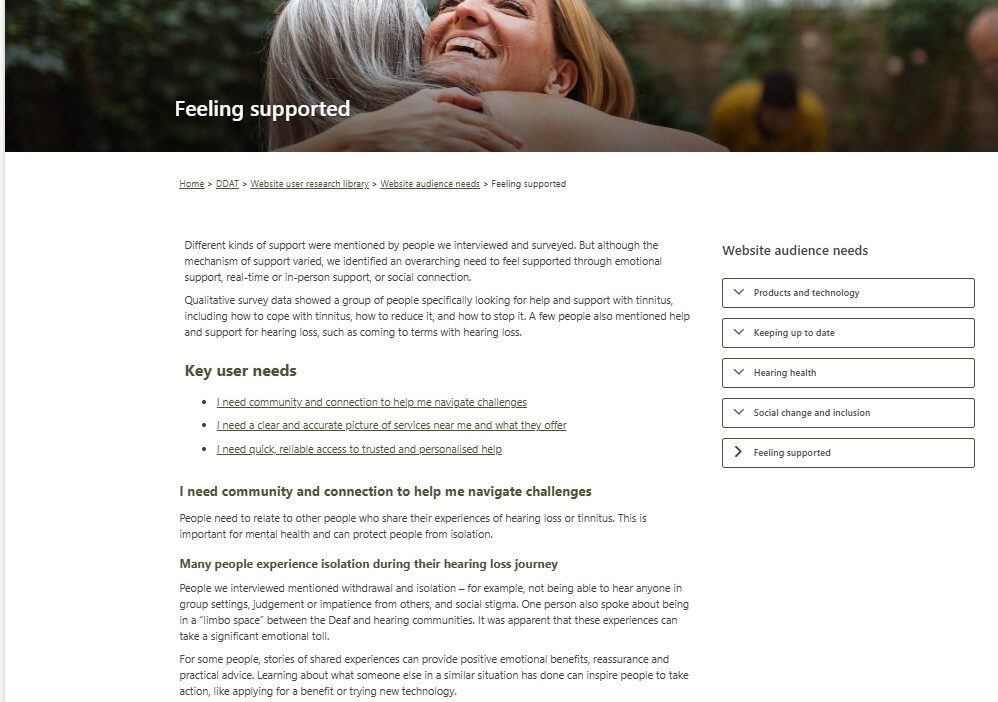
The research findings needed a home, so the data and insights were visible and a reference point for the organisation. So I built a Website User Research Library in SharePoint on RNID’s intranet. I developed a simplified structured resource organised around research overview, current website experience, audience needs and next steps, so any team across RNID could see the evidence base without needing to go through the raw data.
Alongside the library, the roadmap proposed an ongoing “website research group” a sample of users RNID could draw on repeatedly for future testing, rather than recruiting from scratch for every small iteration or website improvement.
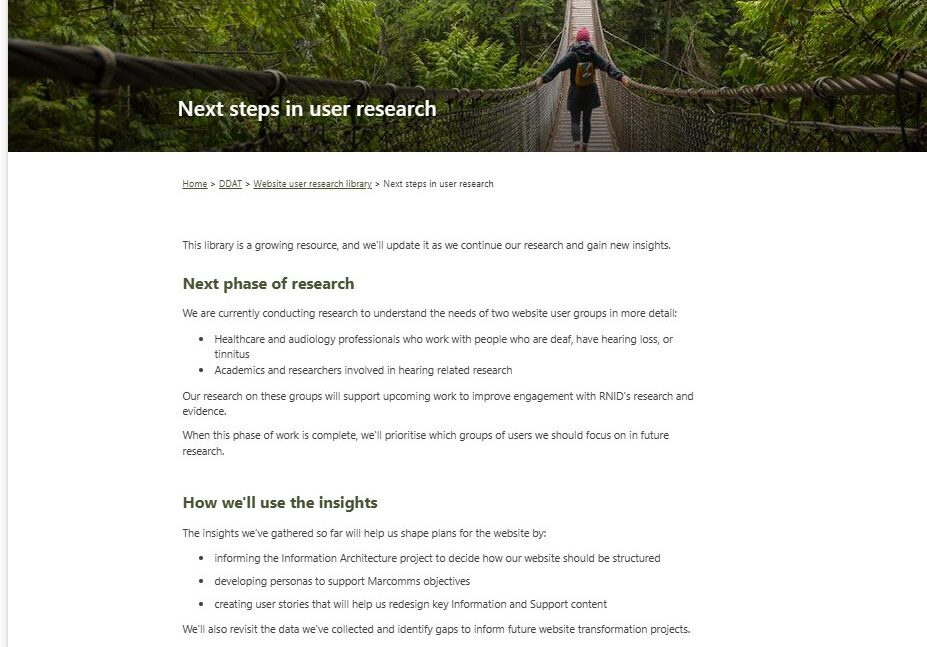
Below is the full library, from landing page through to each research theme’s detail page:
Outcomes
Our assumptions were now replaced with facts and evidence, as previously untested hypotheses about who uses the website were tested directly with more than 20 interview participants and hundreds of survey respondents. This gave us a baseline to measure against, knowing 78% of users were satisfied with the website, while the recurring negative feedback gave the team a concrete starting point to improve journeys and their content, rather than a vague sense that “the website could be better.”
Five core user-need themes now help shape content and product decisions across the website. The research also produced an ongoing, phased roadmap that directly kicked off three follow-on workstreams, the Information Architecture restructure, BSL accessibility discovery, and goal-oriented persona development. And a reusable research library, published on RNID’s intranet, means the evidence base can be used with confidence across the organisation.
Learnings
What went well
Being able to turn vague stakeholder opinions and the other findings into specific hypotheses to test, made it obvious what the research needed to answer, making it clear to the team which assumptions held up and which needed revision.
What was difficult
Building a dedicated, shareable resource for senior leadership and the wider organisation gave the findings a proper home, but it took real, deliberate effort alongside the research itself. As if all needed to feel “tangible,” rather than something that lives in a report and risks being read once and forgotten about.
What I would do differently
Defining success metrics upfront rather than treating them as a separate follow on phase would have allowed us to track long term baseline metrics more effectively. As well as agreeing up front exactly what this research project would look like, including the metrics and how we’d track them over time, would have made it easier to demonstrate impact once the other projects on the roadmap were underway, rather than assembling that evidence retrospectively.